
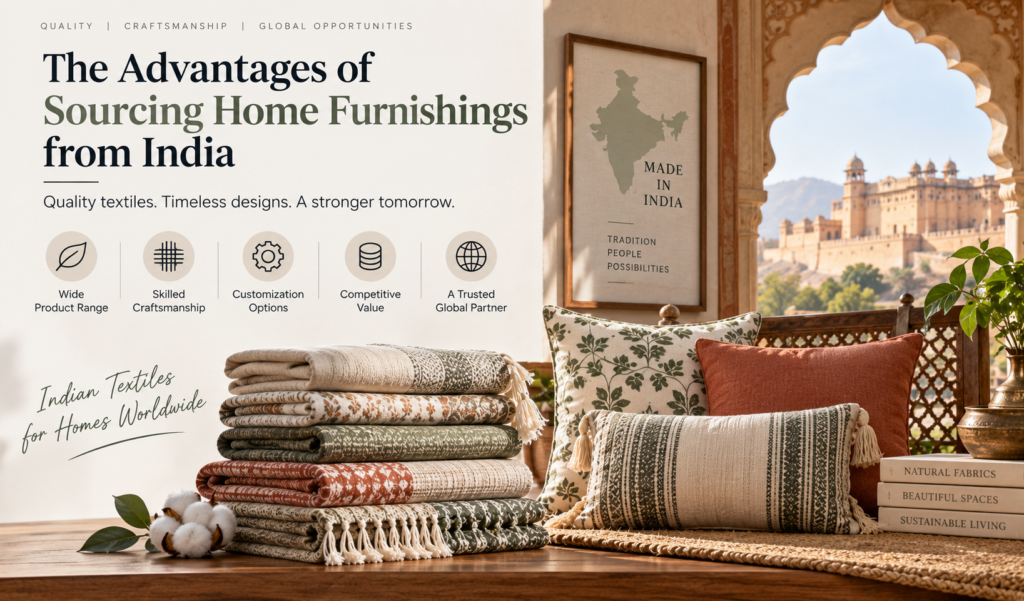
For retailers, wholesalers, importers, and home décor brands, choosing the right sourcing destination is an important business decision. Product quality, pricing, design options, manufacturing capabilities, and delivery reliability can all affect the success of a business.
India has become one of the world’s important sourcing destinations for home furnishing and textile products. Buyers from different countries source a wide range of products from India, including bed linen, cushion covers, table linen, curtains, throws, kitchen textiles, and decorative home accessories.
One of the main reasons for India’s popularity is its combination of textile manufacturing experience, skilled craftsmanship, material variety, and customization capabilities. Whether a buyer is looking for large-volume products or a more specialized collection, Indian suppliers can offer a wide range of possibilities.
Here are some of the main advantages of sourcing home furnishings from India.
1. India Has a Strong Home Textile Manufacturing Industry
India has a long history of textile production and craftsmanship. Over the years, the country has developed a strong manufacturing base for textiles and home furnishing products.
Indian manufacturers produce a wide variety of products for both domestic and international markets. This experience has helped many suppliers understand the needs of global buyers.
Home furnishing products sourced from India can include:
- Bed sheets and bed linen
- Duvet covers
- Pillow covers
- Cushion covers
- Curtains
- Tablecloths
- Table runners
- Kitchen towels
- Throws and blankets
- Decorative textile products
Because of this wide product range, buyers can often source multiple home furnishing categories from the same country.
For retailers and brands, this can make product sourcing and collection planning more convenient.
2. A Wide Range of Fabrics and Materials
One of the biggest advantages of sourcing home furnishings from India is the variety of materials available.
India is well known for its textile industry and offers products made from different natural and blended materials.
Some commonly used materials include:
- Cotton
- Linen
- Organic cotton
- Recycled and blended fabrics
- Jute
- Other natural fibers
Different materials are suitable for different types of products and markets.
For example, cotton is widely used for bed linen, kitchen textiles, and other everyday home products. Linen may appeal to customers looking for a natural and premium appearance. Jute and other natural materials can be used in decorative and home décor products.
This variety gives buyers more flexibility when developing product collections for different customer groups.
3. Strong Design and Craftsmanship Capabilities

India is known for its traditional textile techniques and skilled craftsmanship.
Many Indian home furnishing products combine modern designs with traditional skills. This can give retailers and brands access to products with unique textures, patterns, and decorative details.
Depending on the supplier and product category, buyers may find options such as:
- Printed fabrics
- Embroidery
- Handcrafted details
- Woven textures
- Decorative stitching
- Traditional textile techniques
At the same time, Indian manufacturers also produce modern and simple designs suitable for contemporary homes.
This combination gives buyers the flexibility to develop collections ranging from traditional and decorative products to modern and minimalist styles.
4. Competitive Pricing and Good Value
Pricing is an important consideration for every importer and retailer.
India can offer competitive pricing for many home furnishing products due to its strong textile manufacturing ecosystem and availability of materials and skilled production.
However, the advantage is not simply about finding the lowest price.
A good sourcing decision should focus on overall value, including:
- Product quality
- Material selection
- Design
- Manufacturing capabilities
- Customization
- Packaging
- Long-term reliability
Buyers should avoid choosing suppliers based only on the cheapest quotation. A lower price may sometimes result in compromises in fabric quality, stitching, finishing, or other important details.
Instead, sourcing from India can give buyers the opportunity to find products that offer a good balance between quality, design, and cost.
5. Customization and Private Label Opportunities
Many retailers and brands want products that are different from standard market offerings.
This is another area where Indian home furnishing manufacturers can provide advantages.
Depending on the supplier, buyers may be able to request:
- Custom colors
- Custom prints
- Custom sizes
- Specific fabrics
- Brand labels
- Custom packaging
- Private-label products
For example, a retailer may want to develop a bed linen collection using colors that match its brand identity.
Another buyer may want cushion covers with exclusive designs that are not available to other retailers.
Customization allows businesses to create a stronger product identity and offer something more unique to their customers.
For private-label brands, working with a manufacturer that understands customization can be an important part of building a successful collection.
6. A Wide Variety of Product Styles

Different markets have different design preferences.
Some customers prefer neutral colors and simple designs, while others look for bold patterns, decorative details, or colorful products.
Indian suppliers can produce a wide variety of styles, including:
- Modern and minimalist designs
- Traditional patterns
- Printed collections
- Natural and earthy styles
- Decorative products
- Premium home textiles
This variety can be useful for international buyers selling in different markets.
For example, a retailer may create one collection with simple neutral bed linen and another collection with colorful printed products.
The ability to source different styles can help businesses create a more complete and diverse product range.
7. Experience in Working With International Buyers
Many established Indian manufacturers and exporters have experience working with buyers from different countries.
International buyers often have specific requirements related to:
- Product specifications
- Measurements
- Packaging
- Labeling
- Quality standards
- Shipping
Suppliers with export experience may already understand many of these requirements.
However, every market and buyer is different. It is still important to clearly communicate your individual requirements.
A professional supplier should be willing to discuss product specifications, provide samples, and confirm important details before production begins.
Good communication between the buyer and supplier is one of the most important parts of successful international sourcing.
8. Flexibility for Different Types of Buyers
India offers opportunities for different types of businesses.
These may include:
- Retailers
- Wholesalers
- Importers
- Online brands
- Home décor businesses
- Hospitality buyers
- Private-label brands
Some buyers may need large production volumes, while others may be looking for customized or specialized products.
The Indian manufacturing industry includes companies of different sizes and capabilities. This gives buyers more options when searching for a supplier that matches their business requirements.
The key is to find a supplier whose production capabilities, product experience, and communication style match your needs.
9. Growing Interest in Sustainable and Natural Products
Consumers are becoming more interested in how products are made and what materials are used.
This has increased demand for products made from natural and more responsibly sourced materials.
India has access to a variety of natural textile materials, including cotton, linen, and jute.
Many buyers are now looking for products that offer:
- Natural materials
- Durable construction
- Reusable products
- Reduced unnecessary packaging
- More responsible sourcing practices
For brands and retailers, sourcing products that match changing customer preferences can be an important business opportunity.
When sustainability is part of your product strategy, it is important to discuss your specific requirements with the supplier and ask for clear information about the materials and processes being used.
10. Opportunities for Long-Term Supplier Relationships
Sourcing is not only about placing a single order. For many businesses, finding a reliable long-term supplier can make future operations much easier.
Once a supplier understands your:
- Product requirements
- Quality expectations
- Preferred materials
- Packaging needs
- Design preferences
Future orders can often become easier to manage.
A long-term relationship can also support product development. For example, a retailer may want to introduce new colors for the next season or develop an entirely new collection.
A supplier who already understands the buyer’s business may be in a better position to support these requirements.
Trust, clear communication, and consistent quality are important for building successful long-term sourcing relationships.
Things to Consider Before Sourcing From India
While India offers many advantages, buyers should still take the time to choose their suppliers carefully.
Before placing a large order, consider the following steps:
Clearly Define Your Requirements
Provide detailed information about products, materials, sizes, colors, and packaging.
Request Samples
Samples allow you to evaluate the actual product before approving bulk production.
Check Product Quality
Look at fabric, stitching, finishing, measurements, and packaging.
Discuss Production Timelines
Make sure the supplier can meet your expected delivery schedule.
Understand Shipping and Import Requirements
Check the costs and requirements involved in importing products into your country.
Build Clear Communication
Good communication can prevent misunderstandings and make the sourcing process smoother.
Conclusion
India offers several important advantages for businesses sourcing home furnishing products. Its strong textile manufacturing industry, wide variety of materials, skilled craftsmanship, design capabilities, customization options, and experience with international markets make it an attractive sourcing destination.
For retailers and brands, India provides opportunities to develop a wide range of home furnishing collections, from simple everyday products to premium and customized designs.
However, successful sourcing still depends on choosing the right supplier. Buyers should take time to research manufacturers, communicate their requirements clearly, review samples, and confirm important details before production begins.
With the right sourcing partner, businesses can benefit from India’s diverse home textile industry and build product collections that meet the needs of their customers.
Looking to source home furnishing and textile products from India? Abhishek Exports works with international buyers looking for quality home textiles and customized products based on their specific requirements. Contact us to discuss your sourcing needs.