
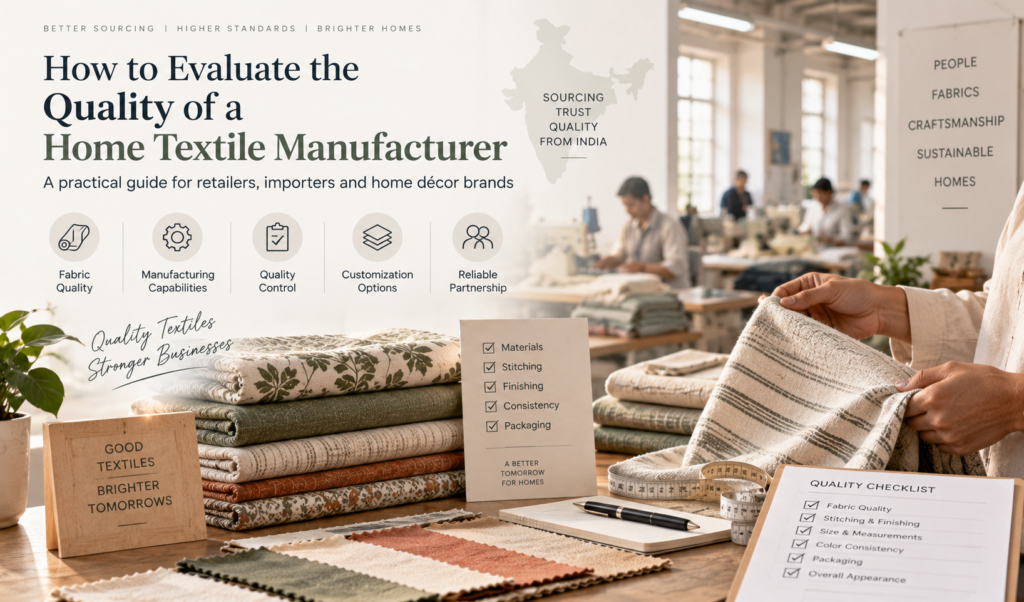
Choosing the right home textile manufacturer is an important decision for retailers, importers, wholesalers, and private-label brands. The quality of your supplier can directly affect the quality of the products you sell to your customers.
A manufacturer may offer attractive prices and a large product range, but that does not always mean they can consistently deliver good-quality products. Problems with fabric, stitching, measurements, colors, packaging, or delivery can create difficulties for your business.
For this reason, it is important to carefully evaluate a manufacturer before placing a large order.
In this guide, we will explain the main factors you should consider when evaluating the quality of a home textile manufacturer.
1. Check Their Experience in Home Textiles
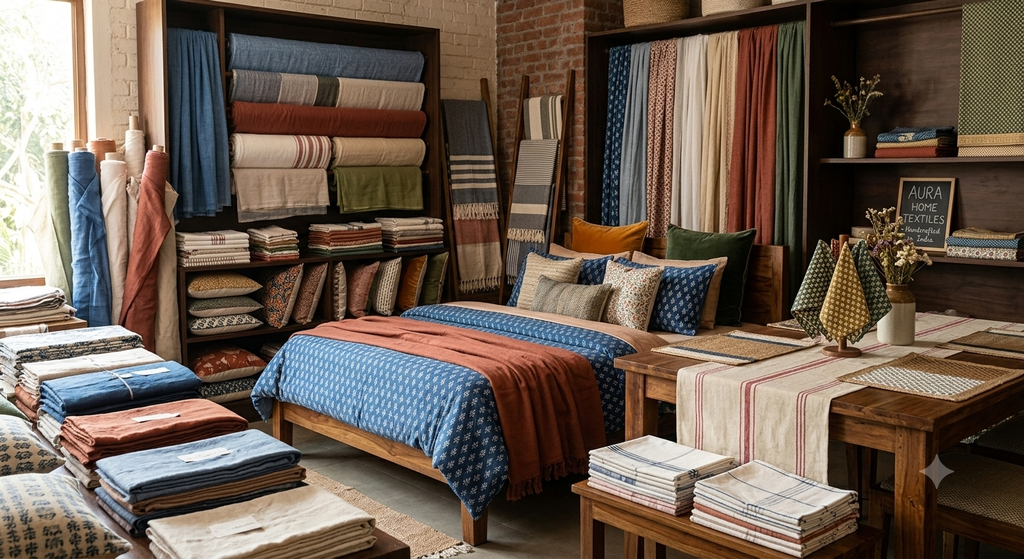
The first thing to consider is the manufacturer’s experience.
Home textiles include many different products, such as:
- Bed sheets and bed linen
- Duvet covers
- Pillow covers
- Cushion covers
- Curtains
- Table linen
- Kitchen textiles
- Throws and blankets
Not every textile manufacturer specializes in every product.
A manufacturer with experience in the specific products you want to source is more likely to understand the materials, construction, finishing, and quality requirements involved.
For example, a company that regularly produces bed linen may have more experience with fabric selection, sizing, stitching, and packaging for bedding products.
Before choosing a manufacturer, ask about their main product categories and the type of buyers they work with.
2. Evaluate the Quality of Their Fabrics and Materials
The fabric is one of the most important parts of any home textile product.
A good manufacturer should be able to provide clear information about the materials being used.
Depending on the product, this may include:
- Cotton
- Linen
- Organic cotton
- Blended fabrics
- Recycled materials
- Other natural fibers
When evaluating fabric quality, consider factors such as:
- How the fabric feels
- Fabric strength
- Thickness or weight
- Consistency
- Color quality
- Overall appearance
For example, two products may both be described as cotton, but the quality and feel can be very different depending on the type of yarn, fabric construction, and finishing.
Ask the manufacturer for clear details instead of relying only on general descriptions.
For larger orders, reviewing actual fabric samples can help you make a better decision.
3. Request Product Samples
One of the best ways to evaluate a home textile manufacturer is by reviewing samples.
Product photographs and online catalogs can be useful, but they cannot always show the actual quality of a product.
A sample allows you to check important details yourself.
When reviewing a sample, look at:
- Fabric quality
- Stitching
- Measurements
- Color
- Print quality
- Finishing
- Labels
- Packaging
If you are ordering customized products, request a sample based on your specific requirements.
For example, if you need a particular color, size, or design, the sample should reflect those requirements.
Approving a sample before bulk production can help reduce the risk of receiving products that do not meet your expectations.
4. Check Stitching and Product Finishing
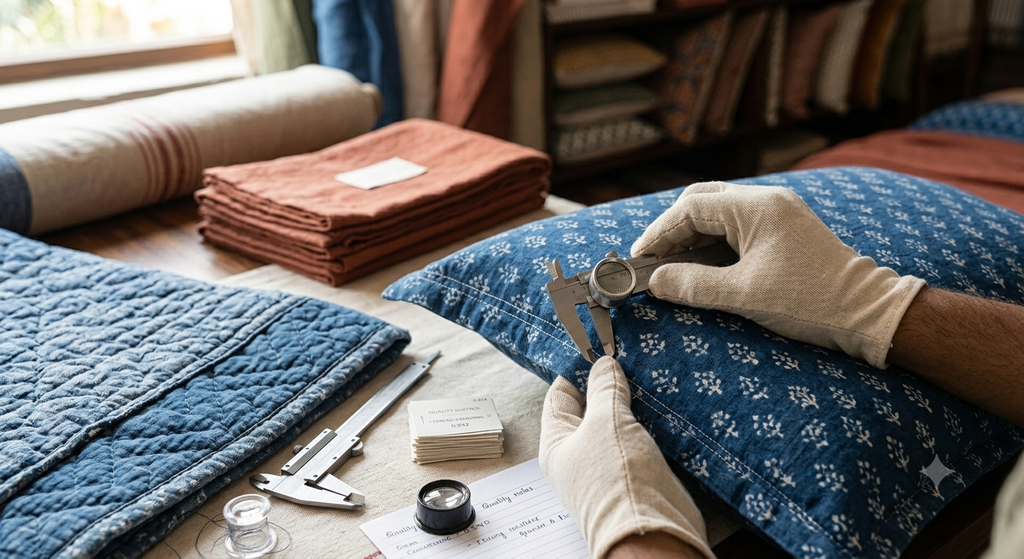
Small details can make a big difference in the final quality of a home textile product.
Poor stitching or finishing can make even a good-quality fabric look cheap or poorly made.
When evaluating samples, check:
- Are the stitches straight and consistent?
- Are there loose threads?
- Are hems finished properly?
- Are seams strong?
- Does the product look neat and professional?
For products such as cushion covers, bed sheets, duvet covers, and curtains, proper stitching is important for both appearance and durability.
A reliable manufacturer should maintain consistent standards across all products, not just the samples.
This is why quality checks during bulk production are also important.
5. Understand Their Quality Control Process
A good manufacturer should have a proper quality control process.
Ask how they check products during and after production.
Important questions may include:
- Are products checked during production?
- Is there a final inspection before packing?
- How are defective products handled?
- Are measurements checked?
- Are colors and prints inspected?
- Is packaging checked before shipment?
A manufacturer does not need to claim that every product will be perfect. What is more important is having a reliable system for identifying and correcting problems before products are shipped.
Quality control should cover more than just the finished product. It should ideally include fabric, production, finishing, and packaging.
A clear quality control process shows that the manufacturer takes consistency seriously.
6. Evaluate Their Manufacturing Capabilities
A reliable manufacturer should have the right capabilities for your requirements.
Before placing an order, understand:
- What products they can manufacture
- What order quantities they can handle
- Whether they can manage customized products
- Their production capacity
- Their typical production timelines
The largest manufacturer is not always the best choice.
A very large factory may be suitable for high-volume orders, while a medium-sized manufacturer may offer more flexibility for customized collections.
The important thing is to find a manufacturer whose capabilities match your business needs.
You should also think about future growth. If your business expands, can the manufacturer handle larger repeat orders?
7. Check Consistency, Not Just One Good Sample
One of the biggest mistakes buyers can make is judging a manufacturer based only on one excellent sample.
A good sample is important, but consistency is even more important.
The manufacturer should be able to maintain the same quality across the entire production order.
For example, if you order 5,000 cushion covers, the first product and the last product should meet the same agreed standards.
Ask the manufacturer how they maintain consistency during bulk production.
You can also discuss:
- Production monitoring
- Quality checks
- Sample approval
- Final inspection
For larger orders, some buyers choose to arrange an independent inspection before shipment.
This can provide additional confidence that the bulk order matches the agreed specifications.
8. Evaluate Communication and Professionalism
Good communication is an important sign of a professional manufacturer.
Pay attention to how the company communicates before you even place an order.
A reliable manufacturer should:
- Respond clearly to questions
- Understand your requirements
- Provide realistic information
- Explain possible limitations
- Keep you updated about important changes
Be careful with suppliers who promise everything immediately without properly discussing your requirements.
For example, if you request a difficult custom design, a professional manufacturer should explain what is possible and how it may affect pricing or production time.
Honest communication is often more valuable than unrealistic promises.
When working internationally, clear communication can prevent many problems.
9. Review Their Customization Capabilities
If you are building your own brand, customization may be an important factor.
Depending on the manufacturer, customization options may include:
- Custom sizes
- Custom colors
- Custom prints
- Brand labels
- Private-label products
- Custom packaging
Ask the manufacturer whether they have experience with customized orders.
It is also important to understand minimum order quantities for customization.
Some custom products may require a larger order quantity because of printing, dyeing, or packaging requirements.
Discuss these details before finalizing your product plans.
A manufacturer with good customization capabilities can help your business create products that stand out in the market.
10. Look at Packaging and Product Presentation
Packaging is sometimes overlooked, but it can be an important part of the customer experience.
This is especially true for retail and private-label products.
Check whether the manufacturer can provide packaging that matches your requirements.
This may include:
- Product labels
- Brand tags
- Printed packaging
- Care instructions
- Barcodes
- Custom boxes or bags
The packaging should also protect the product during transportation.
A well-made product can still arrive in poor condition if it is not packed properly.
For international shipments, strong and suitable export packaging is especially important.
11. Check Production Timelines and Reliability
Product quality is important, but delivery reliability also matters.
A manufacturer may produce excellent products, but repeated delays can create serious problems for retailers and brands.
Before placing an order, discuss:
- Sample development time
- Bulk production time
- Expected completion date
- Packaging time
- Shipment preparation
A reliable manufacturer should provide realistic timelines.
Be cautious about suppliers who promise extremely fast production without understanding your order requirements.
It is better to work with a manufacturer that provides an honest and achievable schedule.
For seasonal collections, proper planning is especially important.
12. Consider Their Approach to Long-Term Business Relationships
The best manufacturer is often one that you can work with over the long term.
A good supplier relationship can make future orders easier because the manufacturer already understands your:
- Product requirements
- Quality expectations
- Preferred materials
- Sizes
- Packaging needs
Over time, this can make communication and product development more efficient.
Look for a manufacturer that is interested in building a professional business relationship rather than simply completing one order.
Trust, transparency, and consistent performance are important for long-term sourcing success.
A Simple Checklist Before Choosing a Manufacturer
Before making your final decision, ask yourself these questions:
✓ Do they have experience with my products?
✓ Have I reviewed product samples?
✓ Is the fabric quality suitable for my market?
✓ Is the stitching and finishing good?
✓ Do they have a clear quality control process?
✓ Can they handle my required order quantity?
✓ Can they provide customization if needed?
✓ Do they communicate clearly and professionally?
✓ Can they meet realistic production timelines?
✓ Can they maintain consistent quality for repeat orders?
If you can confidently answer these questions, you will be in a much stronger position to choose the right manufacturing partner.
Conclusion
Evaluating a home textile manufacturer requires more than comparing prices.
A reliable manufacturer should offer good product quality, consistent production, clear communication, suitable manufacturing capabilities, and a strong approach to quality control.
Before placing a large order, take the time to understand the manufacturer’s experience, request samples, inspect the fabric and finishing, and discuss your requirements clearly.
The right manufacturing partner can help your business maintain product quality and build trust with your customers.
For retailers, wholesalers, importers, and private-label brands, choosing the right home textile manufacturer is an important investment in long-term business success.
Looking for a reliable home textile manufacturing partner in India? Abhishek Exports works with international buyers looking for quality home furnishing and textile products based on their specific requirements. Contact us to discuss your sourcing needs.