
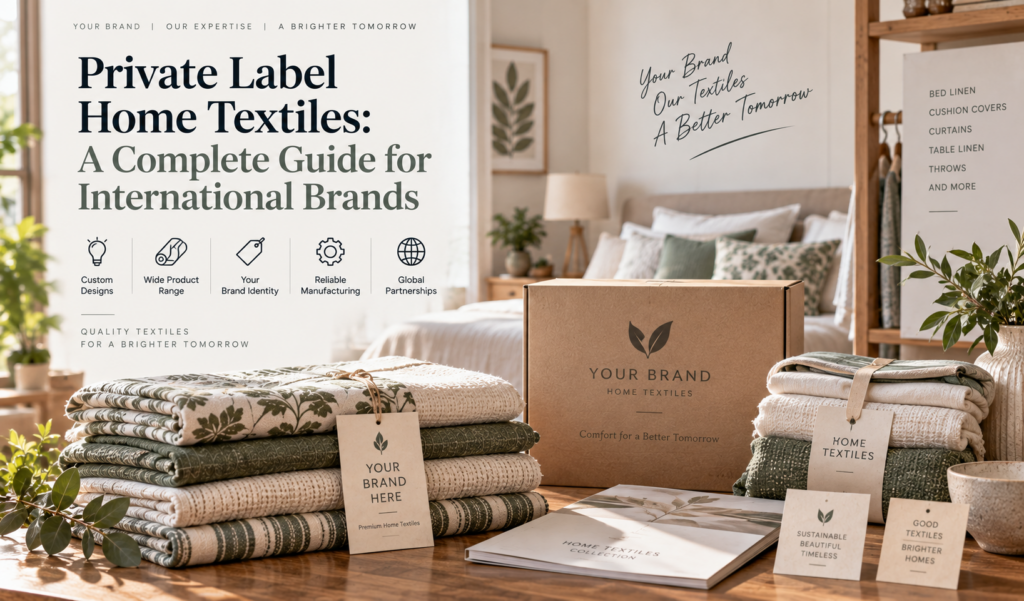
Building a home textile brand can be an exciting opportunity, but creating every product yourself is not always practical. This is where private label home textiles can help.
Private labeling allows a business to sell home textile products under its own brand name while working with a manufacturer or exporter to produce the products. The buyer can often choose the fabric, colors, designs, sizes, labels, and packaging according to their requirements.
For international retailers, wholesalers, and online home décor brands, private label manufacturing can make it easier to create a unique product collection without setting up their own textile factory.
In this guide, we will explain what private label home textiles are, how the process works, and what international brands should consider before choosing a manufacturing partner.
What Are Private Label Home Textiles?
Private label home textiles are products manufactured by one company and sold by another company under its own brand name.
For example, a home décor brand may want to sell its own collection of cushion covers. Instead of manufacturing them itself, the brand can work with a textile manufacturer in India.
The manufacturer produces the cushion covers according to the brand’s requirements. The products can then carry the brand’s own labels, packaging, and other details.
Private label home textiles can include:
- Bed sheets
- Duvet covers
- Pillow covers
- Cushion covers
- Curtains
- Tablecloths
- Table runners
- Kitchen towels
- Throws
- Blankets
- Other home furnishing products
This model gives brands more control over how their products look and how they are presented to customers.
Why Are Private Label Home Textiles Popular?
Private labeling has become an attractive option for businesses that want to build their own identity in the home furnishing market.
Instead of selling generic products that may also be available from many other retailers, brands can develop collections that are connected to their own brand.
Some important advantages include:
Building Your Own Brand
Products can carry your brand name, logo, labels, and packaging. This helps create a consistent identity across your product range.
More Product Control
You can have greater control over colors, fabrics, sizes, designs, and other product details.
Creating Unique Collections
Private label products can be developed according to the style and preferences of your target customers.
Developing Long-Term Products
Once you establish a relationship with a reliable manufacturer, you can continue developing new products and collections over time.
For example, a home décor brand could start with cushion covers and later introduce bed linen, throws, and table textiles under the same brand.
How Does Private Label Home Textile Manufacturing Work?
The process can vary depending on the manufacturer and the product, but it generally follows a few important steps.
1. Decide Your Product Range
Start by deciding what products you want to sell.
You may begin with one product category or develop a complete collection.
For example, a new home décor brand could start with:
- Cushion covers
- Table runners
- Throws
Another brand may focus entirely on premium bed linen.
Starting with a clear product range can make the sourcing process easier.
2. Define Your Product Requirements
Once you know what products you want, decide what you want them to look and feel like.
Your requirements may include:
- Fabric type
- Size
- Color
- Design
- Pattern
- Stitching
- Finishing
- Label
- Packaging
If you already have designs or product samples, you can share them with the manufacturer.
Clear product specifications are important because they help the manufacturer understand exactly what you expect.
For example, instead of saying that you want a “premium cushion cover,” specify the fabric, size, color, closure, finishing, and other details.
3. Find the Right Private Label Manufacturer
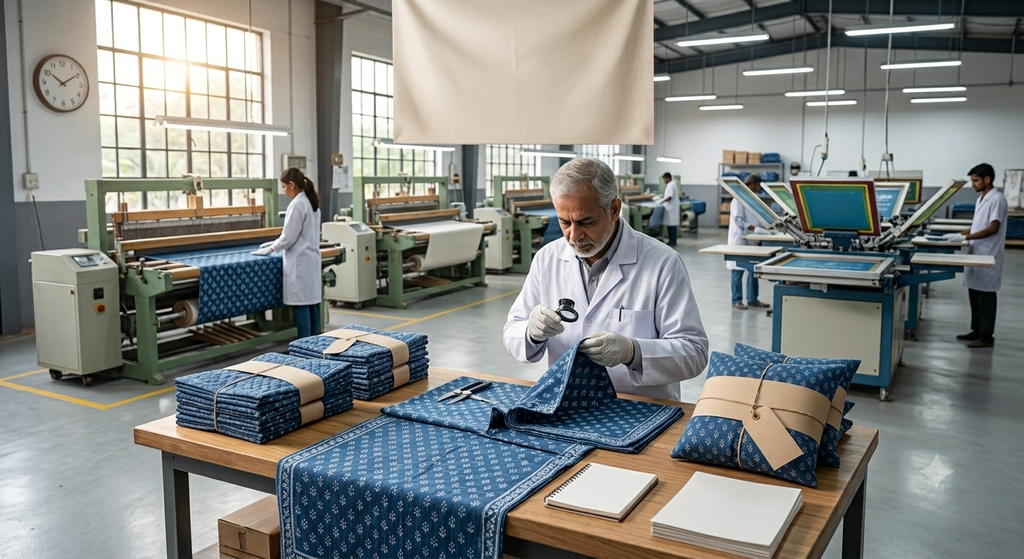
Choosing the right manufacturing partner is one of the most important steps.
Look for a manufacturer that has experience producing the type of home textiles you want to sell.
You should consider:
- Product experience
- Manufacturing capabilities
- Quality standards
- Customization options
- Minimum order quantities
- Production capacity
- Communication
- Export experience
Do not choose a manufacturer only because they offer the lowest price.
The quality of your products will affect your brand’s reputation. A reliable manufacturing partner should be able to provide consistent quality and communicate clearly throughout the process.
4. Review Samples Before Bulk Production
Before placing a large order, request product samples.
This is especially important for private label products because you are building your own brand around them.
A sample allows you to check:
- Fabric quality
- Product measurements
- Color
- Print quality
- Stitching
- Finishing
- Overall appearance
If the product does not meet your expectations, you can discuss changes with the manufacturer before bulk production begins.
For customized products, the approved sample can also serve as a reference during production.
Taking this step seriously can help prevent costly problems later.
5. Develop Your Brand Labels and Packaging
One of the main advantages of private labeling is the ability to present the products under your own brand.
Depending on your requirements, private label packaging may include:
- Brand labels
- Logo tags
- Care labels
- Product cards
- Printed bags
- Boxes
- Custom packaging
Packaging should match the overall style of your brand.
For example, a premium home décor brand may choose simple, elegant packaging, while a more colorful lifestyle brand may prefer brighter designs.
Good packaging can also help create a better customer experience when the product reaches the buyer.
6. Choose Fabrics Carefully
The fabric you choose can have a major impact on the appearance, feel, durability, and price of your products.
Common materials used in home textiles include:
- Cotton
- Linen
- Organic cotton
- Blended fabrics
- Jute
- Other natural fibers
The right fabric depends on your product and target market.
For example, cotton can be a practical choice for everyday bedding and kitchen textiles. Linen may be suitable for brands looking for a natural and premium appearance.
When selecting a fabric, think about more than just price. Consider how it feels, how it performs, how it looks, and whether it matches your brand positioning.
7. Understand Minimum Order Quantities
Private label manufacturers often have minimum order quantities, commonly known as MOQs.
The minimum quantity can vary depending on the product and level of customization.
For example, producing a standard product may require a different minimum quantity than creating a completely custom design, color, or packaging.
Before finalizing your product range, ask the manufacturer about:
- Minimum quantity per product
- Minimum quantity per color
- Minimum quantity for custom designs
- Minimum quantity for custom packaging
Understanding these requirements early can help you plan your inventory and budget more effectively.
8. Discuss Pricing and Total Costs
Product price is an important part of private label sourcing, but it should not be the only consideration.
Your total cost may include more than the manufacturing price.
Depending on your order, you may need to consider:
- Product cost
- Customization costs
- Labels
- Packaging
- Shipping
- Import duties
- Taxes
- Other applicable charges
Ask your supplier for clear pricing based on your exact requirements.
Comparing suppliers is also easier when you compare similar products with the same specifications.
A cheaper quotation may not actually be cheaper if it includes lower-quality materials or excludes important costs.
9. Focus on Quality Consistency
When customers buy a product from your brand, they expect a consistent level of quality.
This means the manufacturer should be able to maintain the agreed standards throughout the production process.
Quality checks can cover:
- Fabric
- Measurements
- Stitching
- Colors
- Prints
- Finishing
- Labels
- Packaging
Do not judge a manufacturer only by the quality of one sample. Ask how they manage quality during bulk production.
For larger orders, some international buyers may also arrange an inspection before shipment.
Good quality control can help protect your brand reputation and reduce problems with customers.
10. Think About Your Target Customer
Your private label collection should be designed around the people you want to sell to.
Ask yourself:
Who is my customer?
Are they looking for affordable everyday products, premium home textiles, modern designs, traditional patterns, or sustainable materials?
Your answer can influence almost every product decision.
For example, a premium brand may focus on high-quality fabrics, subtle colors, detailed finishing, and attractive packaging.
A value-focused brand may instead prioritize practical products, competitive pricing, and simple packaging.
Understanding your customer helps you create a product collection with a clear purpose.
11. Build a Long-Term Relationship With Your Manufacturer
Private labeling works best when the buyer and manufacturer develop a strong working relationship.
As your brand grows, you may want to:
- Add new products
- Introduce new colors
- Develop seasonal collections
- Increase order quantities
- Improve packaging
- Create new designs
A manufacturer that already understands your requirements can make these future projects easier.
Good communication and consistent quality are important for building a long-term relationship.
Instead of looking for a supplier for only one order, try to find a manufacturing partner who can grow with your business.
Common Mistakes to Avoid
Private label manufacturing can offer many opportunities, but international brands should avoid a few common mistakes.
Ordering Large Quantities Too Early
Start by testing your products and market demand before committing to very large quantities.
Choosing Only Based on Price
Low prices are not useful if the product quality does not meet your expectations.
Skipping the Sample Stage
Always review samples carefully before approving bulk production.
Providing Unclear Instructions
Give the manufacturer clear information about fabrics, sizes, colors, designs, labels, and packaging.
Ignoring Packaging
Your packaging is part of your brand experience. Make sure it matches your product and target market.
Not Planning for Shipping and Import Costs
Calculate your overall landed cost before deciding your selling price.
Is Private Label Home Textiles Right for Your Brand?
Private label manufacturing can be a good option for businesses that want to build their own identity in the home furnishing market.
It can be especially useful for:
- Online home décor brands
- Retailers
- Wholesalers
- Department stores
- Boutique brands
- Hospitality businesses
- Home lifestyle companies
If you want more control over your products and want to build a recognizable brand, private labeling may be worth considering.
The key is to find a manufacturing partner that understands your requirements and can consistently deliver the quality you expect.
Conclusion
Private label home textiles give international brands an opportunity to create and sell products under their own identity without having to operate their own manufacturing facility.
From choosing fabrics and designs to adding brand labels and custom packaging, businesses can develop products that match their customers and brand image.
However, successful private label sourcing requires careful planning. Choose your products carefully, define your specifications, request samples, understand minimum order quantities, check quality, and discuss pricing and production timelines clearly.
Most importantly, choose a reliable manufacturing partner who can maintain quality and support your brand as it grows.
For international brands looking to source home furnishing products from India, private label manufacturing can be a practical way to develop unique collections and build a stronger presence in the home textile market.
Looking for a private label home textile manufacturer in India? Abhishek Exports works with international buyers to develop home furnishing and textile products based on their specific requirements, including customized designs, fabrics, labels, and packaging. Contact us to discuss your private label requirements.