
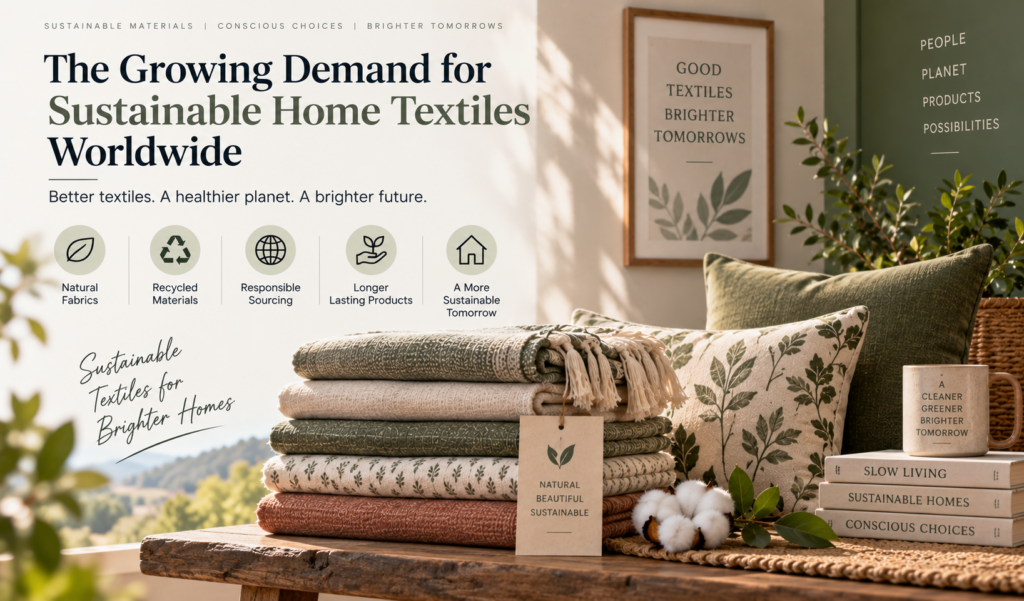
The home furnishing industry is changing as customers around the world become more aware of how products are made, what materials are used, and what happens to products after they are no longer needed.
Sustainability is no longer only a concern for a small group of environmentally conscious customers. It is becoming an important consideration for retailers, home décor brands, wholesalers, and international buyers.
For businesses sourcing home textiles, this change creates both an opportunity and a responsibility. Buyers are increasingly looking for products that combine good design, quality, comfort, and more responsible material choices.
From cotton and linen to recycled materials and better packaging, there are several ways home textile products can become more sustainable.
In this article, we will look at why sustainable home textiles are becoming more popular and what international buyers should consider when sourcing them.
1. What Are Sustainable Home Textiles?
Sustainable home textiles are products designed and produced with greater attention to their impact on people and the environment.
There is no single definition of a sustainable textile product. Different products can involve different materials, manufacturing methods, packaging, and care requirements.
Sustainability in home textiles can involve areas such as:
- Use of natural or recycled materials
- Responsible use of resources
- Longer-lasting products
- Reduced waste
- Better packaging choices
- More efficient production
- Responsible manufacturing practices
For example, a home textile product made from a natural fiber may be attractive to customers who prefer natural materials. A product made using recycled fibers may appeal to customers looking for ways to reduce the use of new raw materials.
The important point for buyers is to understand exactly what makes a product sustainable instead of relying only on general marketing claims.
2. Why Is Demand for Sustainable Home Textiles Growing?

Consumer preferences are changing in many parts of the world.
People are becoming more interested in understanding the products they purchase. They may want to know where products are made, what materials they contain, and whether the products are designed to last.
This has influenced the home furnishing market.
Customers are increasingly looking for products that offer a combination of:
- Comfort
- Good quality
- Attractive design
- Durability
- Natural materials
- Responsible sourcing
For retailers and brands, this means sustainability can become part of their overall product strategy.
A brand that understands these preferences can develop collections that appeal to customers who want their homes to look good while also making more thoughtful purchasing decisions.
3. Natural Fabrics Are Becoming More Popular
Natural fibers are an important part of the sustainable home textile conversation.
Materials such as cotton and linen are widely used in home furnishing products and are familiar to customers around the world.
Natural fabrics can be used for products such as:
- Bed linen
- Cushion covers
- Curtains
- Table linen
- Kitchen textiles
- Throws
For many consumers, the natural feel and appearance of these materials are part of their appeal.
Cotton, for example, is widely used because it is comfortable and versatile. Linen has a distinctive natural texture and is often associated with relaxed and premium interiors.
However, buyers should remember that calling a product “natural” does not automatically mean every part of its production is sustainable.
It is important to ask suppliers about the specific material, processing, finishing, and certifications involved.
4. Recycled Materials Are Getting More Attention
Another important development is the growing interest in recycled materials.
Recycled fibers can be used in different types of textile products and may help reduce the need for new raw materials.
For brands focused on sustainability, recycled materials can provide another option when developing home furnishing collections.
However, buyers should ask clear questions about the material.
For example:
- What percentage of the product is recycled?
- What type of recycled material is being used?
- Is the material certified?
- Is the recycled content consistent from one production batch to another?
Clear information is important because it allows brands to communicate honestly with their customers.
If sustainability is a key part of your brand, it is better to make specific and verifiable claims rather than using broad statements that may be difficult to support.
5. Durable Products Can Be a More Sustainable Choice
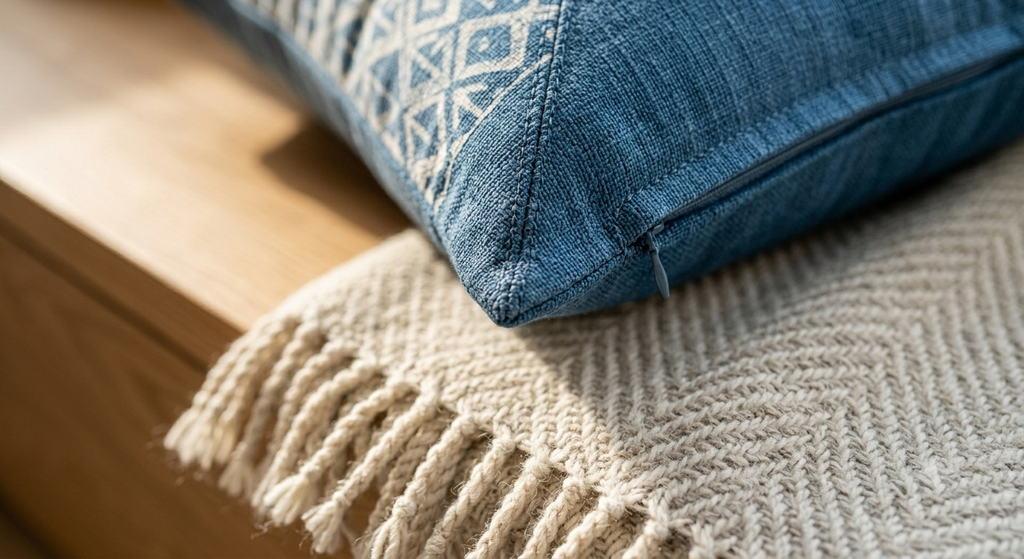
Sustainability is not only about the material used to make a product.
Product durability is also important.
A product that lasts longer may not need to be replaced as frequently. This can help customers get more value from their purchases and may reduce unnecessary waste.
For home textile buyers, durability can depend on several factors, including:
- Fabric quality
- Construction
- Stitching
- Finishing
- Care requirements
- Intended use
For example, a retailer selling everyday bed linen should consider whether the products can handle regular washing and use.
Similarly, cushion covers, table linen, and kitchen textiles should be suitable for how customers are expected to use and care for them.
When evaluating a sustainable product, therefore, do not focus only on the material. Look at the complete product.
6. Sustainable Packaging Is Also Important
The product itself is only one part of the sourcing process.
Packaging is another area where brands can consider more responsible choices.
Traditional packaging can sometimes involve unnecessary layers or materials. Businesses are therefore looking at ways to reduce packaging waste while still protecting products during storage and transportation.
Depending on the product, buyers may consider:
- Minimal packaging
- Recyclable materials
- Reusable packaging
- Reduced plastic use
- Appropriately sized packaging
However, packaging still needs to protect home textile products from dust, moisture, and damage during transportation.
The goal should not simply be to use less packaging. It should be to find packaging that provides the necessary protection without unnecessary material.
For international shipments, this balance is particularly important.
7. Buyers Are Asking More Questions About Sourcing
As sustainability becomes more important, international buyers are becoming more careful about their suppliers.
Instead of simply asking about product price and delivery time, buyers may also want to understand how products are manufactured.
Questions can include:
- Where are the materials sourced?
- What type of fabric is being used?
- Are there certifications available?
- How is quality controlled?
- What type of packaging is used?
- Does the manufacturer have experience with sustainable products?
These questions can help buyers make better sourcing decisions.
They can also help brands provide more useful information to their customers.
A reliable supplier should be willing to discuss product materials and manufacturing details clearly.
8. Certifications Can Help Buyers Verify Claims
When sourcing sustainable home textiles, buyers may come across different certifications and standards.
Certifications can provide additional information about materials or production practices, depending on what the certification covers.
For example, a buyer may want to verify claims related to:
- Organic materials
- Recycled content
- Textile safety
- Environmental practices
- Responsible production
The exact certification required will depend on the product, target market, and claims a brand wants to make.
Buyers should always check what a particular certification actually covers instead of assuming that one certification proves every aspect of sustainability.
When necessary, ask suppliers to provide valid certification documents and confirm that they apply to the specific products being sourced.
9. Sustainability Can Help Brands Stand Out
The home furnishing market is competitive.
Many retailers sell similar categories of products, so brands are constantly looking for ways to create a stronger identity.
Sustainability can become one part of that identity.
For example, a brand could build a collection around:
- Natural fabrics
- Simple designs
- Long-lasting products
- Responsible packaging
- Thoughtful sourcing
This can help create a clear story around the products.
However, sustainability should be genuine.
Customers are becoming more careful about environmental claims, so brands should avoid making promises that cannot be supported.
Simple, honest information is often more effective than complicated marketing language.
10. What International Buyers Should Look For
If you are an importer, retailer, wholesaler, or private-label brand looking for sustainable home textiles, start by defining what sustainability means for your product range.
For example, you may want to focus on:
Material
Choose natural, recycled, or other materials that fit your product goals.
Product Life
Look for good-quality products designed for their intended use.
Manufacturing
Ask suppliers about their production practices and quality control.
Certifications
If certifications are important to your market, discuss them with the supplier before placing an order.
Packaging
Look for practical packaging that protects the product while avoiding unnecessary materials.
Transparency
Choose suppliers who can provide clear information about the products they manufacture.
Taking these steps can make sustainable sourcing more practical and easier to manage.
11. Sustainable Sourcing Does Not Have to Mean Giving Up Style
One common misconception is that sustainable home textiles have to look simple or plain.
This is not necessarily the case.
Sustainable products can be available in many:
- Colors
- Patterns
- Textures
- Sizes
- Designs
- Finishes
A brand can develop a sustainable collection that still feels modern, attractive, and suitable for its target customers.
For example, natural fabrics can be used to create everything from simple neutral cushion covers to colorful printed table linen.
The key is to combine the right materials and manufacturing approach with designs that customers actually want to buy.
12. The Future of Sustainable Home Textiles
The demand for more responsible home textile products is likely to remain an important part of the industry.
As customers become more informed, retailers and brands will need to think beyond appearance and price.
Product materials, durability, packaging, sourcing, and transparency are all becoming relevant parts of the purchasing decision.
For manufacturers and exporters, this creates an opportunity to work more closely with international buyers and develop products that meet changing market expectations.
For buyers, it means choosing suppliers carefully and asking the right questions before placing an order.
Sustainability is not a single product feature. It is a broader approach to how products are designed, manufactured, packaged, sold, and used.
Conclusion
The growing demand for sustainable home textiles is changing the way many international buyers approach sourcing.
Customers are increasingly interested in natural and recycled materials, durable products, responsible packaging, and greater transparency. As a result, retailers and home décor brands are looking for suppliers who can support these changing requirements.
For businesses sourcing from India, the key is to look beyond the product photograph and price. Ask questions about materials, quality, manufacturing, certifications, packaging, and product durability.
Most importantly, choose products that genuinely match your brand and customer expectations.
Sustainable home textiles can offer an opportunity to create attractive, useful, and long-lasting collections while responding to changing consumer preferences around the world.
Looking for sustainable home textile products from India? Abhishek Exports works with international buyers to develop and supply home furnishing and textile products according to their requirements. Contact us to discuss your sustainable home textile sourcing needs.