
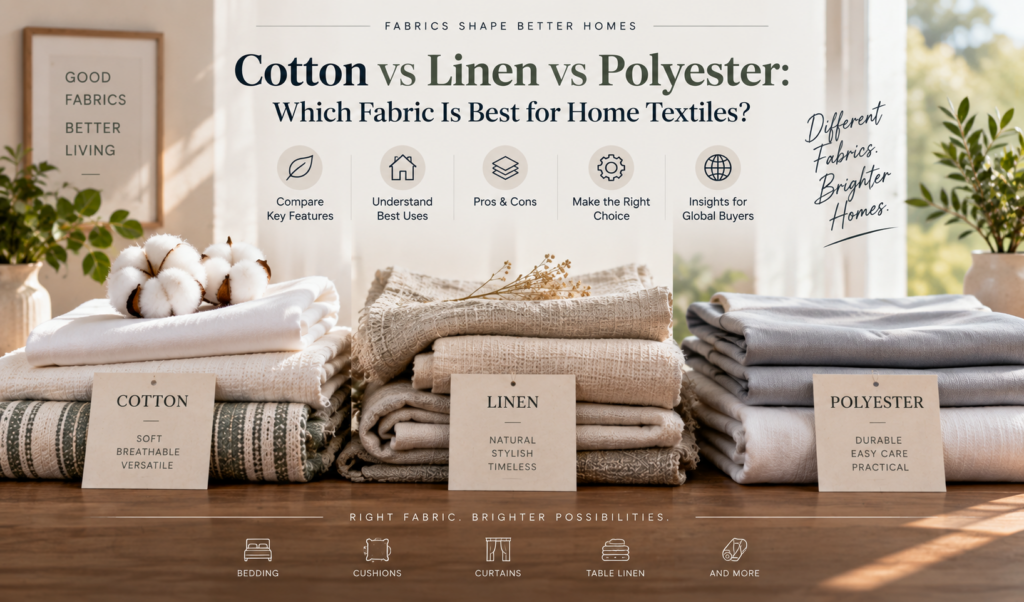
Choosing the right fabric is one of the most important decisions when sourcing home textile products. The fabric affects how a product looks, feels, performs, and lasts. It can also influence the price, care requirements, and suitability for different markets.
Among the many fabric options available today, cotton, linen, and polyester are three commonly considered materials for home textiles.
But which one is best?
The answer depends on the product, your target customers, your budget, and the qualities you want the finished product to have. There is no single fabric that is perfect for every home textile product.
In this guide, we will compare cotton, linen, and polyester in simple terms to help international buyers make a better sourcing decision.
1. Cotton: A Popular Choice for Everyday Home Textiles
Cotton is one of the most widely used materials in home textiles. It is a natural fiber and is commonly used for products such as bed sheets, pillow covers, towels, cushion covers, curtains, and kitchen textiles.
One of the main reasons for its popularity is its comfortable feel.
Cotton can be soft, breathable, and comfortable against the skin, making it particularly suitable for bedding and other products that are used regularly.
Advantages of Cotton
Cotton offers several benefits:
- Soft and comfortable feel
- Good breathability
- Suitable for everyday use
- Available in many qualities and constructions
- Easy to dye and print
- Suitable for a wide range of home textile products
Cotton can also be produced in different qualities, which gives buyers flexibility when developing products for different price ranges.
For example, a retailer may choose a simple cotton fabric for an affordable collection and a higher-quality cotton fabric for a premium bedding range.
Things to Consider With Cotton
Cotton can wrinkle more easily than some synthetic fabrics. Depending on the fabric construction and finishing, it may also shrink if it is not properly treated.
This is why buyers should discuss fabric specifications and finishing requirements with their manufacturer before placing an order.
2. Linen: Natural, Stylish, and Premium
Linen is another natural fiber that is popular in home furnishing products.
It is made from the flax plant and is known for its natural appearance and distinctive texture.
Linen is often associated with relaxed, premium, and natural-looking interiors. It can work particularly well for brands that want their products to have a simple and elegant appearance.
Linen is commonly used for:
- Bedding
- Cushion covers
- Curtains
- Tablecloths
- Table runners
- Decorative textiles
Advantages of Linen
Some of the main advantages of linen include:
- Natural appearance
- Breathable feel
- Distinctive texture
- Suitable for premium-looking products
- Good fit for relaxed and modern interiors
Linen can also become softer with use, which is one reason why some customers appreciate its natural character.
Things to Consider With Linen
One of the most noticeable characteristics of linen is that it wrinkles easily.
For some customers, this is actually part of its charm. The relaxed, slightly wrinkled appearance can create a natural and casual look.
However, buyers looking for a perfectly smooth appearance may prefer another fabric.
Linen can also be more expensive than many standard textile options, depending on the quality and construction.
For brands positioned in the premium or natural home décor segment, however, the appearance and feel of linen can make it an attractive choice..
3. Polyester: Practical and Versatile
Polyester is a synthetic fiber that is widely used in textile products.
It is known for being practical, durable, and versatile. It can be used on its own or blended with other fibers, including cotton.
Polyester can be found in various home textile products, including:
- Curtains
- Cushion covers
- Bedding
- Table textiles
- Decorative products
- Other furnishing textiles
Advantages of Polyester
Some benefits include:
- Good durability
- Lower tendency to wrinkle
- Holds color well
- Easy to maintain
- Available in many finishes
- Can be cost-effective
Polyester can be a useful option for products where easy care and durability are important.
For example, a retailer targeting customers who want low-maintenance home products may find polyester suitable for certain product categories.
Things to Consider With Polyester
Unlike cotton and linen, polyester is not a natural fiber. Some consumers who specifically prefer natural materials may therefore choose cotton or linen instead.
The final feel and appearance can also vary significantly depending on the quality and construction of the fabric.
For buyers who are considering polyester, it is important to review samples and communicate the desired fabric quality clearly with the manufacturer.
Cotton vs Linen vs Polyester: A Simple Comparison
Here is a quick comparison to make the differences easier to understand:
| Feature | Cotton | Linen | Polyester |
|---|---|---|---|
| Fiber type | Natural | Natural | Synthetic |
| Feel | Soft and comfortable | Natural and textured | Can vary by construction |
| Breathability | Good | Very good | Generally lower than natural fibers |
| Wrinkling | Can wrinkle | Wrinkles easily | Usually wrinkles less |
| Durability | Good | Good | Generally very durable |
| Appearance | Versatile | Natural and premium | Versatile |
| Maintenance | Moderate | Can require more care | Generally easy |
| Price range | Wide range | Often higher | Wide range |
| Best suited for | Bedding and everyday textiles | Premium and natural styles | Practical and easy-care products |
The table provides a general comparison. Actual performance can vary depending on fabric quality, construction, finishing, and how the product is used.
4. Which Fabric Is Best for Bed Linen?
For bed linen, cotton is often a strong choice because of its soft feel and breathability.
It is suitable for customers who want comfortable bedding for everyday use.
Linen can also be an excellent choice for premium bedding collections. Its natural texture can give a bedroom a relaxed and sophisticated appearance.
Polyester can be considered when affordability, durability, and easy maintenance are important. Polyester blends can also offer a combination of characteristics from different fibers.
The best option depends on your target customer.
For a premium natural bedding collection, linen may be attractive. For everyday comfortable bedding, cotton can be a practical choice. For a value-focused or easy-care collection, polyester may be worth considering.
5. Which Fabric Is Best for Cushion Covers?
Cushion covers provide more flexibility because appearance can be just as important as comfort.
Cotton can work well for printed and everyday cushion covers. It can provide a comfortable and versatile surface for different designs.
Linen can be an excellent choice for premium and natural-looking cushion collections.
Polyester can be useful for decorative products where durability, color retention, or easy maintenance are important.
For cushion covers, think about the overall style of your collection rather than choosing a fabric based only on price.
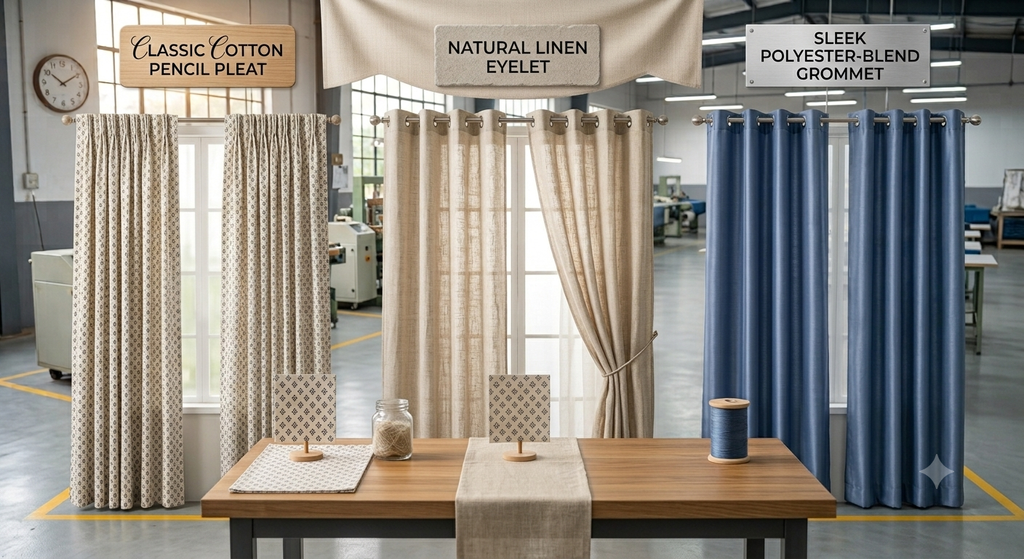
6. Which Fabric Is Best for Curtains?
Curtains need to provide the right combination of appearance, weight, durability, and functionality.
Polyester is commonly considered for curtains because it can be practical and relatively easy to maintain.
Cotton can create a softer, more natural appearance and may suit casual or traditional interiors.
Linen can provide an elegant and natural look, particularly for brands targeting premium or minimalist interiors.
The right choice can depend on whether your customers prioritize appearance, natural materials, easy maintenance, or price.
7. Consider Your Target Market Before Choosing a Fabric
The “best” fabric is different for every market.
Before making a decision, think about your customers.
Ask yourself:
What do they value most?
For example:
- Comfort
- Natural materials
- Premium appearance
- Easy maintenance
- Durability
- Affordable pricing
A premium home décor brand may prefer linen because of its natural appearance.
A family-focused retailer may prefer cotton because of its comfort and versatility.
A value-oriented retailer may consider polyester because of its practical characteristics and pricing possibilities.
Understanding your customer can help you choose the right fabric for your product range.
8. Think About Product Care
Care requirements are another important consideration when selecting fabrics.
Customers want to know how to wash, dry, iron, and maintain their home textile products.
Different fabrics can have different care requirements.
Before finalizing your products, discuss care instructions with your manufacturer and make sure the appropriate information is included on product labels where required.
Clear care instructions can help customers use and maintain their products properly.
For international buyers, it is also important to make sure labeling and care information meet the requirements of the destination market.
9. Don’t Choose Fabric Based Only on Price
Price is naturally important when sourcing home textiles, but it should not be the only factor.
A fabric that costs less may not always provide the quality or appearance your customers expect.
Instead, consider the complete product value.
Look at:
- Fabric quality
- Product durability
- Appearance
- Comfort
- Customer expectations
- Manufacturing requirements
- Final selling price
For example, a premium linen product may cost more to produce than a polyester product, but it may also allow a brand to position the product at a higher price point.
The right fabric should support your overall product and brand strategy.
10. Always Request Samples Before Bulk Production
No matter which fabric you choose, reviewing a physical sample is highly recommended before placing a large order.
A sample allows you to evaluate the actual material and finished product.
Check:
- Fabric feel
- Thickness
- Color
- Texture
- Stitching
- Finishing
- Size
- Overall appearance
If possible, also consider how the fabric behaves after washing or normal use.
This can help you understand whether the material is suitable for your target market.
A reliable manufacturer should be able to discuss different fabric options and help you understand which materials may work for your product requirements.
So, Which Fabric Should You Choose?
There is no universal winner between cotton, linen, and polyester.
Each fabric has its own strengths.
Choose Cotton If:
You want a comfortable, versatile, and widely accepted natural fabric for everyday home textiles.
Choose Linen If:
You want a natural, textured, and premium look for products such as bedding, cushions, curtains, or table linen.
Choose Polyester If:
You are looking for practical, durable, easy-care products and need flexibility in pricing and design.
You can also consider blended fabrics when you want to combine characteristics from different materials.
The right choice ultimately depends on your product, customers, market, and brand positioning.
Conclusion
Cotton, linen, and polyester can all be useful materials for home textile products. The best option depends on what you want your product to offer.
Cotton is a versatile choice for comfortable everyday textiles. Linen is attractive for premium and natural-looking collections. Polyester can be a practical option when durability, easy maintenance, and value are important.
For international buyers, the most important step is to clearly define your product requirements and discuss them with your manufacturer.
Always request samples, compare materials, check the finished product, and consider what your customers actually want before placing a bulk order.
The right fabric can make a significant difference to the look, feel, performance, and market position of your home textile collection.
Looking for a home textile manufacturer in India? Abhishek Exports works with international buyers to develop and supply home furnishing and textile products according to their specific requirements. Contact us to discuss your fabric, product, and sourcing requirements.